
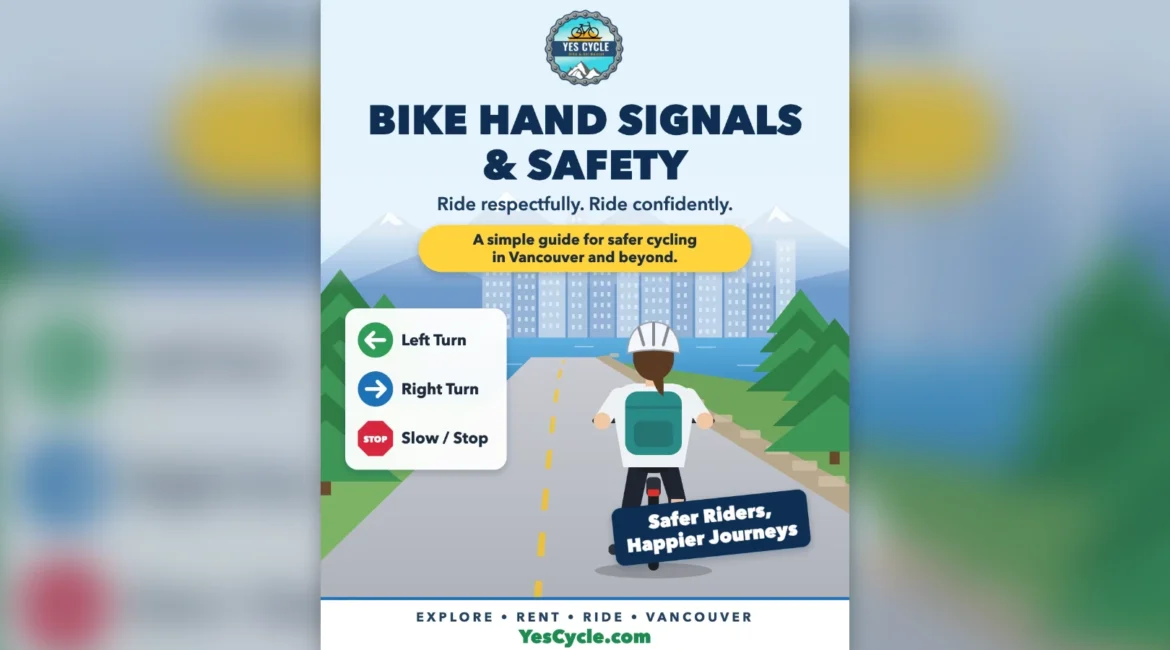
Whether you’re rolling along the Stanley Park Seawall for the first time or commuting across downtown Vancouver, bike hand signals are the simplest way to keep yourself and everyone around you safe. A clear signal tells drivers, pedestrians and other cyclists exactly what you’re about to do, before you do it.
In this guide, the YesCycle team walks you through the essential cycling hand signals used in British Columbia, plus a few habits that make every ride smoother: shoulder checks, pointing out hazards and staying visible. Save it, share it with your riding group, and give it a quick read before you pick up your rental.
Quick Reference: Bike Hand Signals at a Glance
| Signal | How to do it | When to use it |
|---|---|---|
| Left turn | Left arm straight out to the side | Turning or moving left |
| Right turn | Right arm straight out to the side, or left arm bent upward at 90° | Turning or moving right |
| Slowing / stopping | Left arm out and angled down, palm facing back | Before you brake or stop |
| Shoulder check | Quick look over your shoulder | Before turning, changing lanes or passing |
| Hazard ahead | Point down at the hazard (and call it out) | Potholes, gravel, glass, obstacles |
Why Hand Signals Matter When You Cycle
Bikes don’t have turn signals or brake lights, so your arms do the talking. In B.C., signalling isn’t just good manners: the Motor Vehicle Act requires cyclists on the road to signal turns and stops, and the Province’s cycling rules remind riders to “always signal your intent to turn, slow down or stop.”
Good signals make you predictable, and predictable riders are safe riders. They help drivers give you space, stop the cyclist behind you from rear-ending you, and keep busy shared paths like the Seawall flowing smoothly.
1. Left Turn Signal
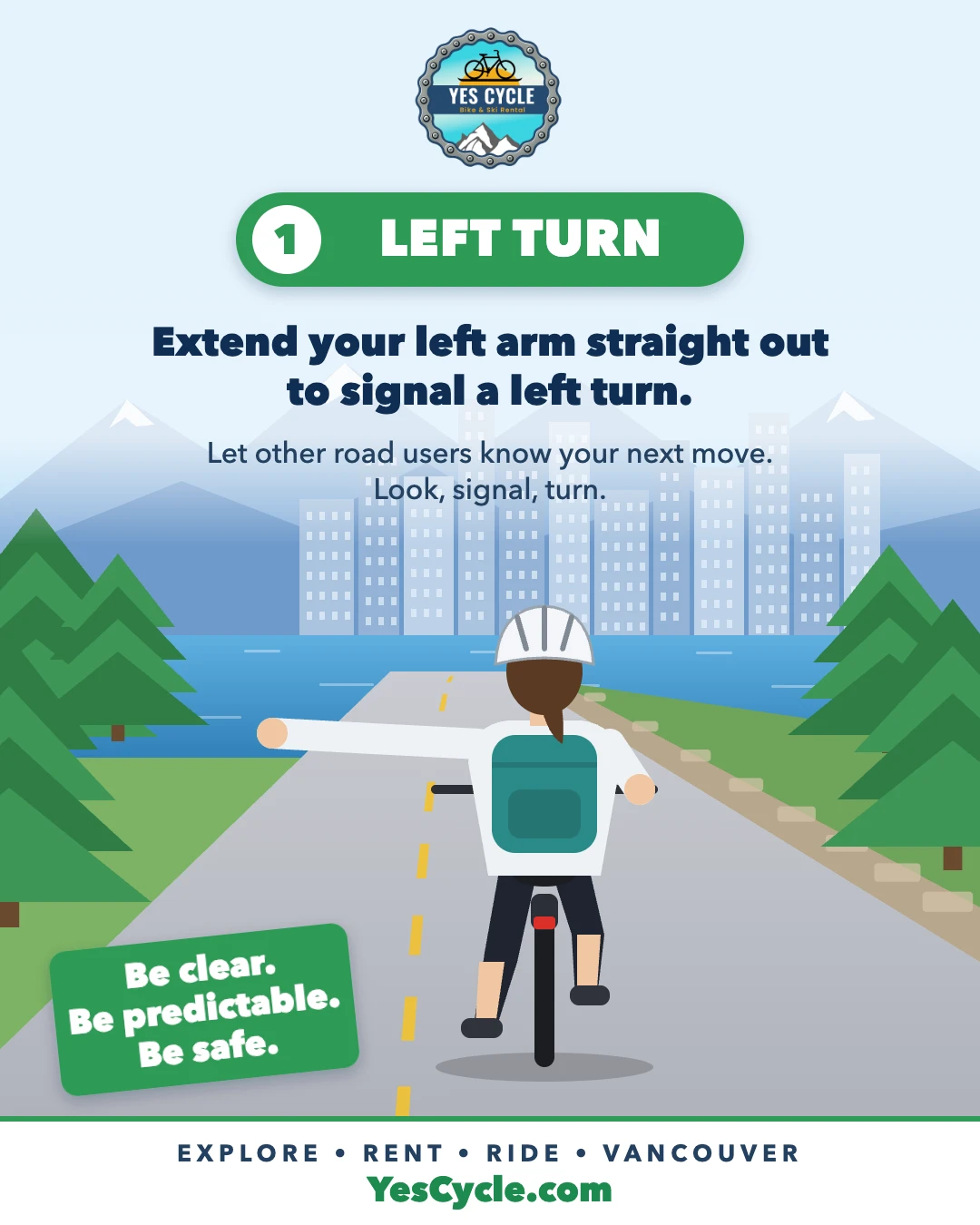
How to do it: Extend your left arm straight out to the side, parallel to the ground, with your hand open or pointing left.
- Look behind you first to make sure it’s clear.
- Signal early, a few seconds before the turn, so others have time to react.
- Turn with both hands back on the handlebars once you’re committed.
Tip: Remember “look, signal, turn.” Be clear, be predictable, be safe.
2. Right Turn Signal (Two Legal Options in B.C.)
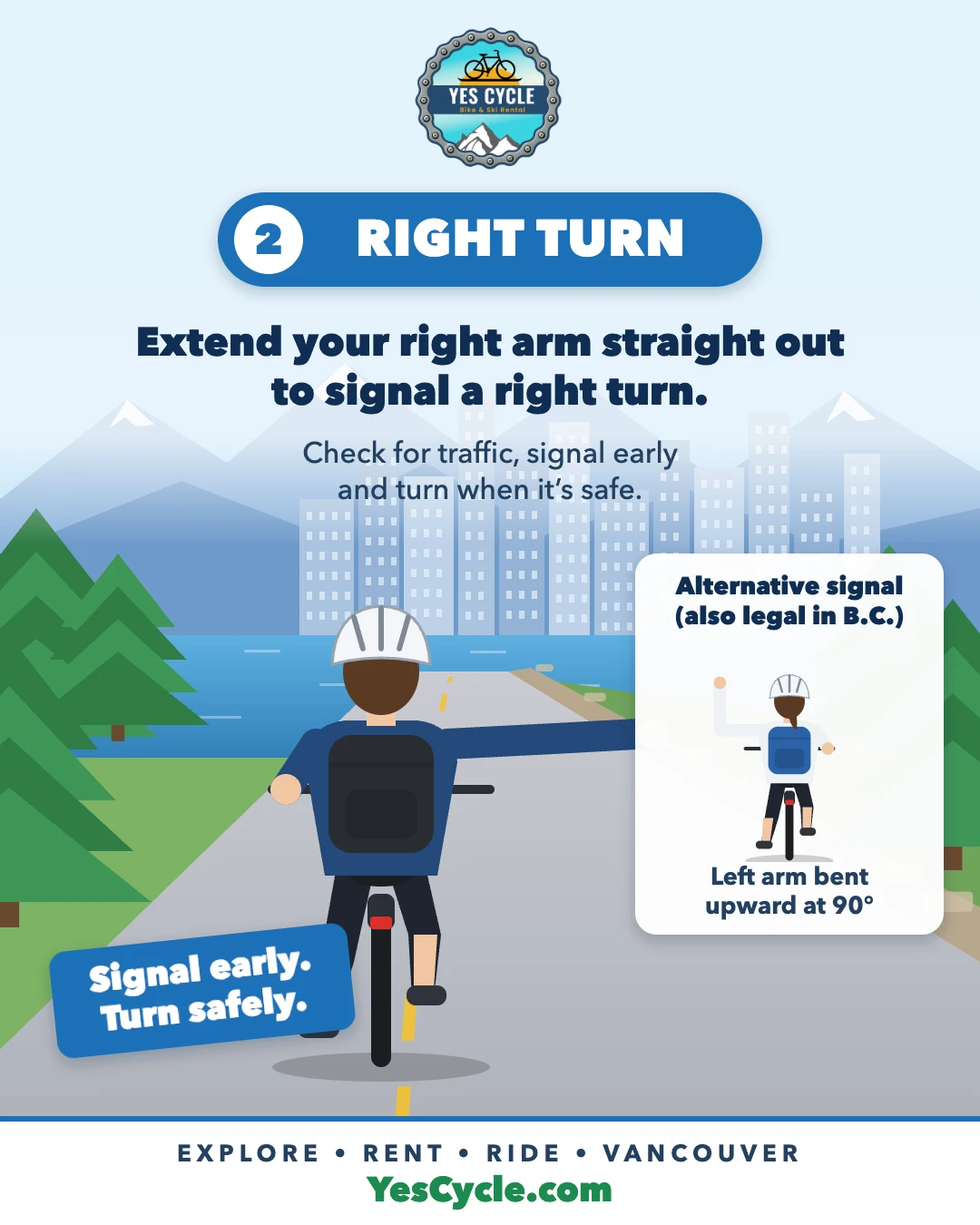
Option 1 (most common): Extend your right arm straight out to the side. It’s intuitive and easy for drivers and other cyclists to understand.
Option 2 (traditional signal): Raise your left arm out to the side and bend it upward at the elbow at a 90° angle, hand pointing to the sky. This is the same signal drivers use from a car window, and it’s also legal for cyclists in B.C.
Whichever you choose, check for traffic, signal early and turn only when it’s safe.
3. Slowing Down or Stopping
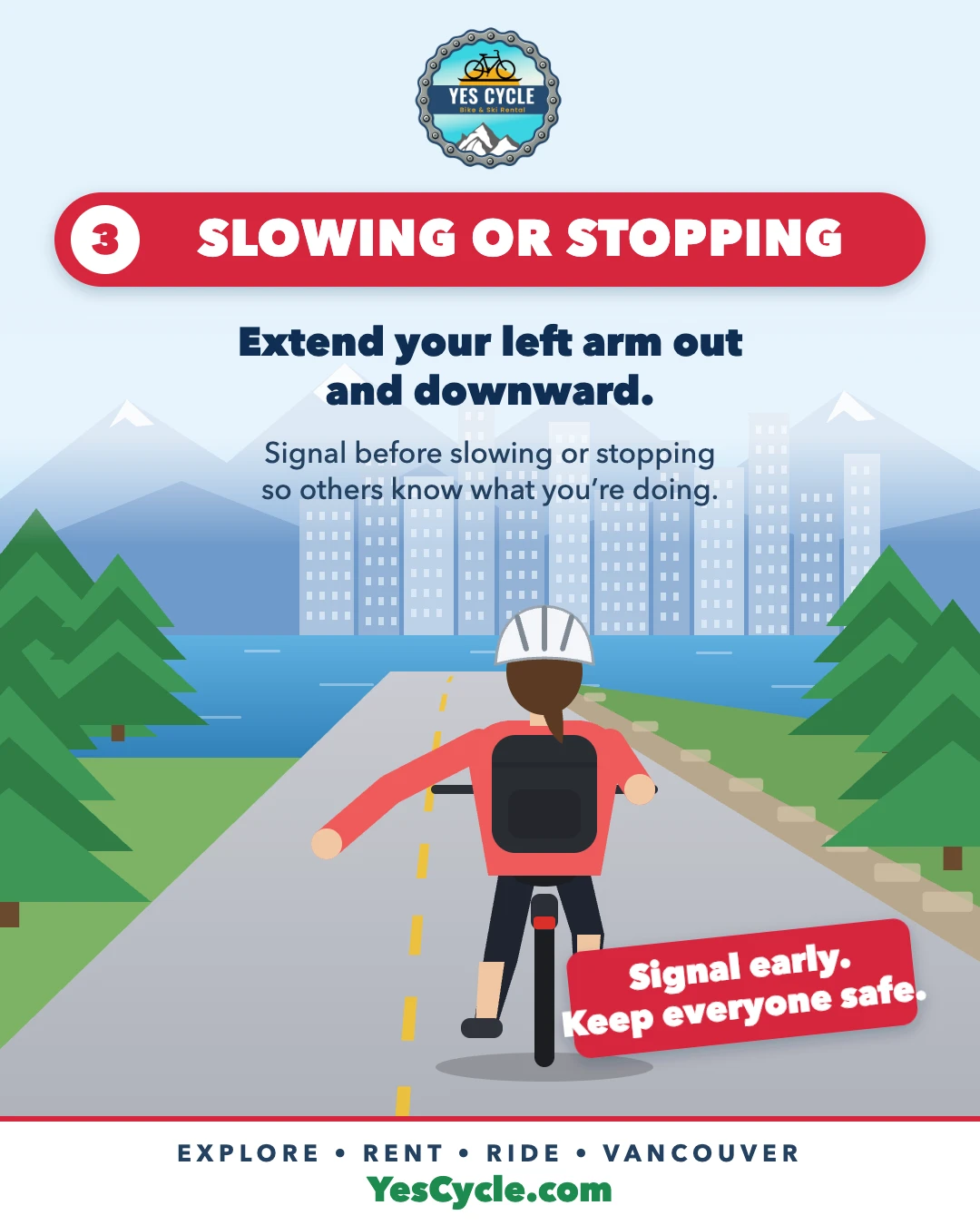
How to do it: Extend your left arm out and angle it downward, with your palm open and facing behind you.
This one is easy to forget, but it’s one of the most useful signals on crowded routes. On a busy stretch of the Seawall or in a group ride, a quick “slowing” signal gives the rider behind you time to brake instead of swerving. Signal early, keep everyone safe, then return both hands to the brakes.
4. The Shoulder Check: Look Before You Move
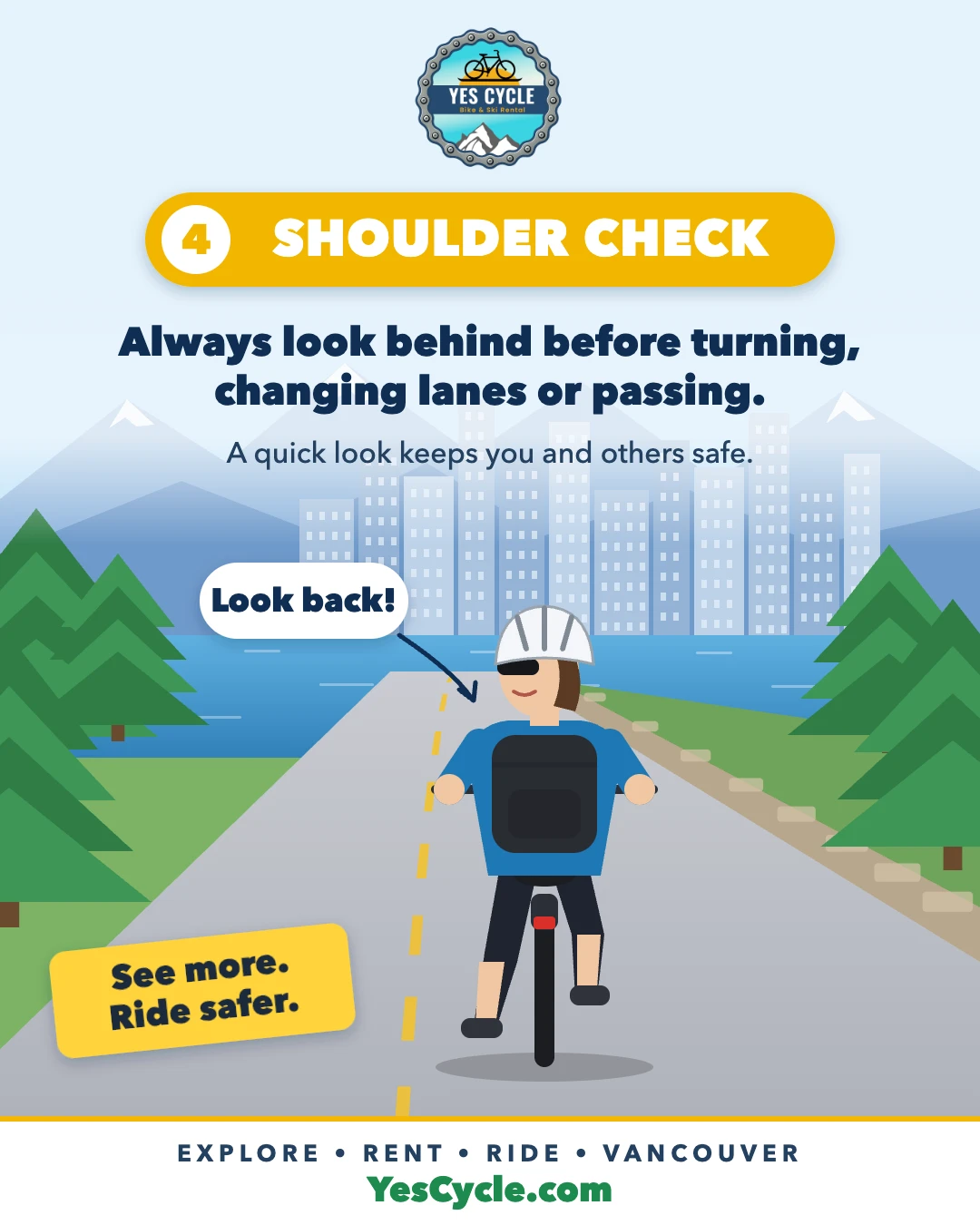
A hand signal tells people what you plan to do. A shoulder check makes sure it’s actually safe to do it. Before you turn, change lanes, pull out around a parked car or pass another rider, take a quick look over your shoulder.
- Keep your hands steady on the bars so you ride in a straight line while you look.
- Check the side you’re moving toward, then signal, then check once more.
- Practise in a quiet spot first if you’re new to riding or trying an e-bike for the first time.
See more, ride safer. It only takes a second.
5. Hazard Ahead: Look Out for Each Other
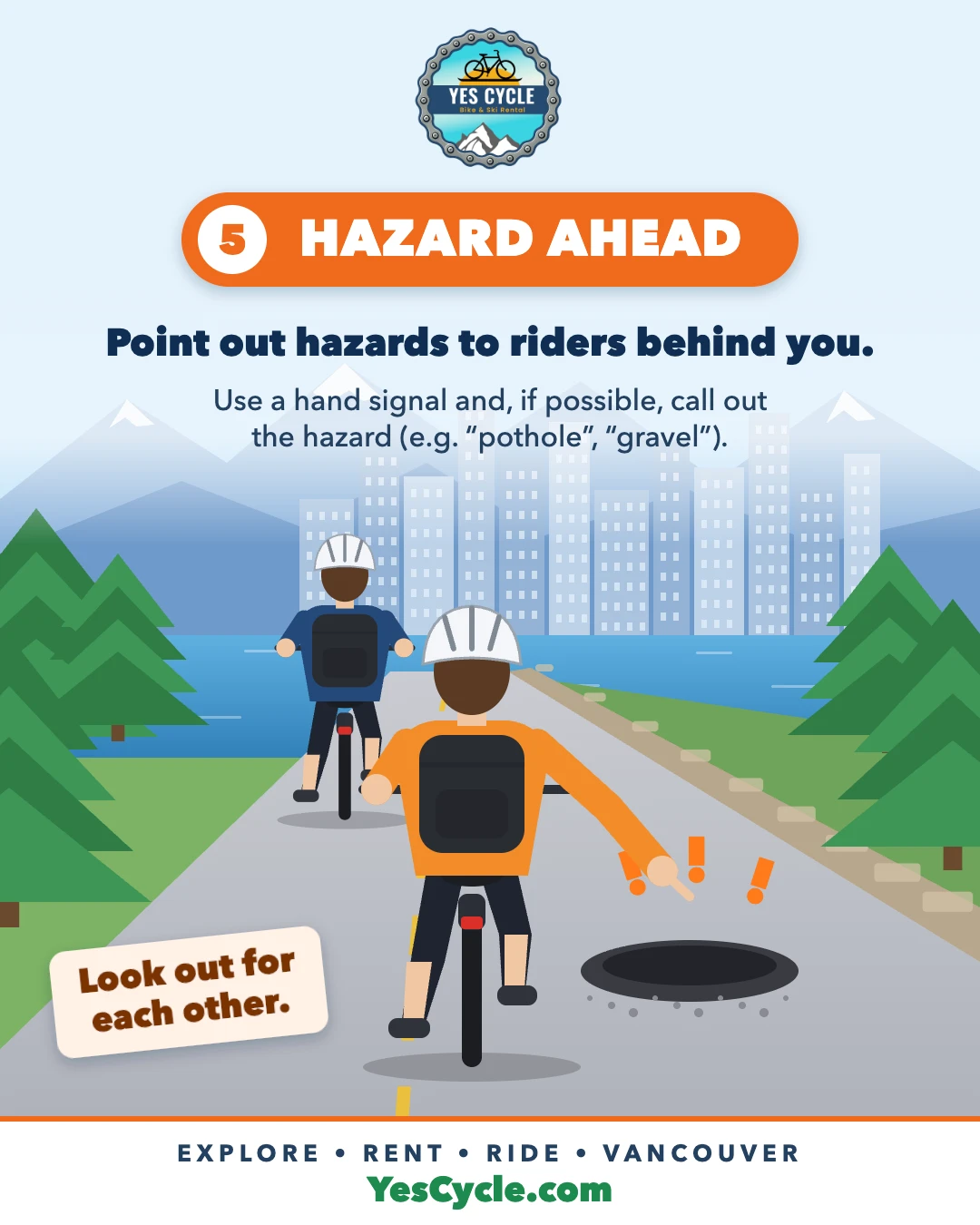
When you’re riding with friends or family, the person in front sees problems first. Point down toward the hazard on the side where it is, and if you can, call it out: “pothole!”, “gravel!”, “glass!” or “car back!”
Common hazards around Vancouver include wet leaves in the fall, tree roots on park paths, storm drains and loose gravel. A quick point from the rider ahead can prevent a fall for everyone behind. It’s what makes cycling better.
6. Be Seen, Be Safe: Lights, Helmet and Visibility
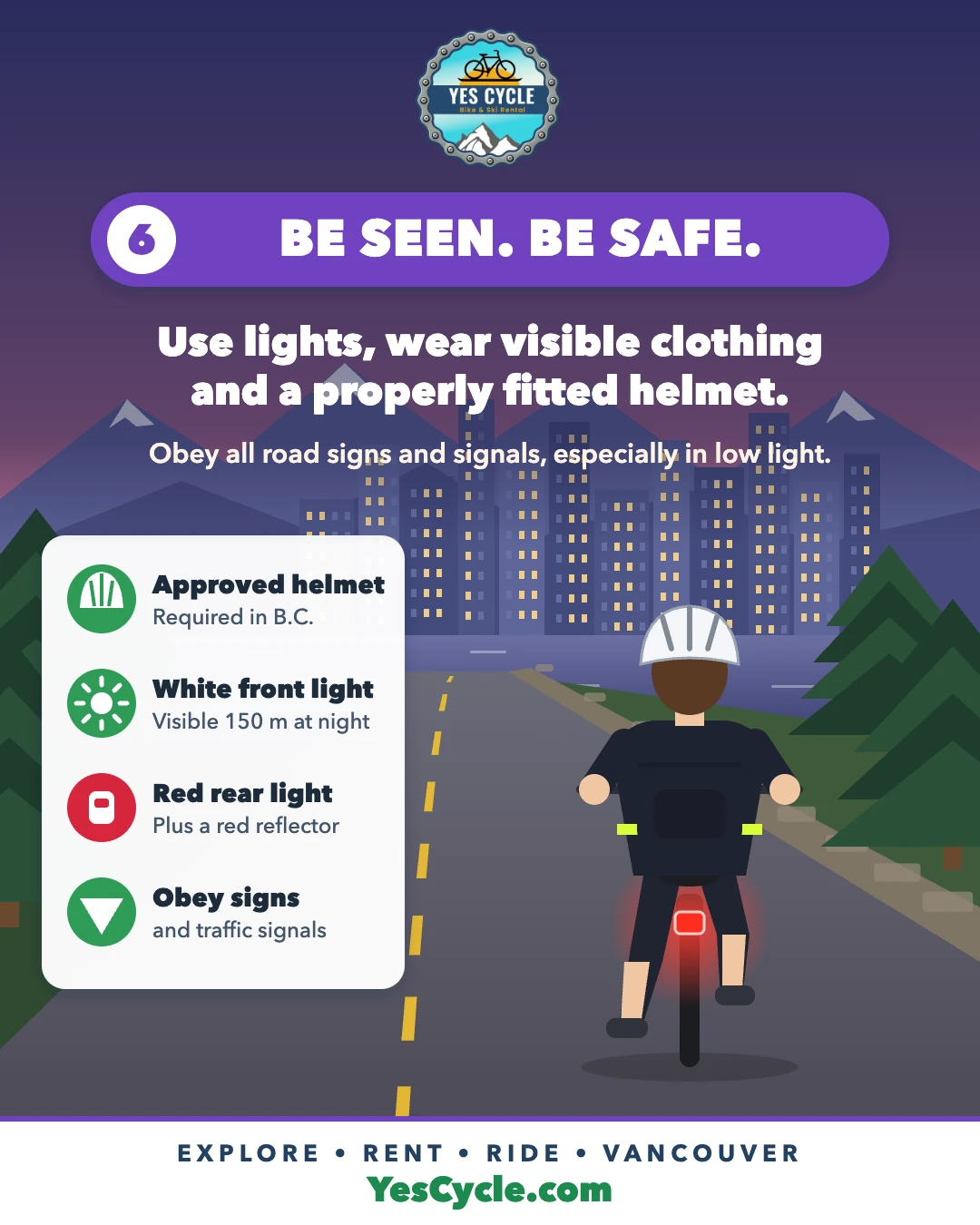
Signals only work if people can see you. Here’s what B.C. law and common sense ask of every rider:
- Wear an approved helmet. Cyclists of all ages must wear a bicycle safety helmet on public roads in B.C. Make sure it sits level and the straps are snug.
- Use a white front light after dark. It must be visible from at least 150 metres.
- Use a red rear light and a red rear reflector when riding between sunset and sunrise.
- Wear bright or reflective clothing, especially on grey, rainy days and at dusk.
- Obey all traffic signs and signals. Cyclists follow the same rules of the road as drivers.
Extra Safety Tips for Riding in Vancouver
- Ride as far right as practicable on the road, unless signs or bike lanes direct you elsewhere.
- Ride single file and only ride side by side when passing.
- Stay off sidewalks unless a sign says cycling is allowed.
- On the Stanley Park Seawall, stay on the bike side of the path, follow the one-way direction and give pedestrians plenty of room.
- Keep both hands on the bars whenever you’re not signalling, and brake before corners, not in them.
Frequently Asked Questions
Are hand signals required for cyclists in B.C.?
Yes. The B.C. Motor Vehicle Act sets out hand signals for cyclists turning left, turning right and stopping or slowing down, and cyclists are expected to signal their intentions on the road.
Can I signal a right turn with my right arm?
Yes. In B.C., cyclists can signal a right turn either by extending the right arm straight out, or by raising the left arm bent upward at 90°. Both are legal.
Do I need to keep signalling all the way through the turn?
No. Signal early so others know your plan, then put both hands back on the handlebars before and during the turn so you stay in control.
Do YesCycle rentals include helmets?
Yes. Every bike, e-bike and e-scooter rental comes with a helmet, and our team is happy to help you adjust it and show you the basics before you head out.
Ready to Ride? Rent a Bike Near Stanley Park
Now that you know the signals, you’re ready to explore Vancouver with confidence. YesCycle is on Denman Street, just steps from Stanley Park and the Seawall, and our friendly team is always happy to walk you through safety basics before you roll out. Browse our bike rentals, e-bike rentals and e-scooter rentals, or read E-Bike vs. Traditional Bike: Which Should You Rent in Vancouver? to choose your ride.
Safer riders, happier journeys. See you on the Seawall!
